
The law has not changed. You can still file the I-485. Do not panic. However, USCIS has been reminded to look at positive and negative factors while making their decision on the I-485s. So, but do not treat I-485 as automatic anymore.
For employment-based applicants or those in that status, maintain your H-1B or L-1 status if possible.
Add positive evidence that enables USCIS to exercise their discretion in your favor. For pending cases, collect documents of positive evidence in case USCIS issues an RFE, NOID, interview notice, or discretionary challenge.
Yes, you can still file new I-485 applications with USCIS. The new guidance memo is directed at USCIS officers who adjudicate (approve or deny) I-485 applications. Its language instructs officers to treat adjustment as “an extraordinary discretionary relief” and to deny applications absent a showing of unusual equities.
However, it does not direct the agency to stop accepting or receiving new I-485 filings.
So, when you file, add a lot of documents that show your positive equities
These are favorable, humanizing factors and circumstances. Factors may include, but are not limited to:
Eligibility for the benefit sought
Family ties in the United States and the closeness of those relationships
Hardship to the applicant or family if denied
Contributions to the community and service
Length of lawful residence in the United States, including age at entry
Service in the U.S. Armed Forces
Steady employment history
Property or business ties in the United States
History of tax compliance
Likelihood of imminent lawful permanent resident status
Evidence of good moral character (affidavits, community testimony)
Voluntary community service beyond what courts required
This is a non-exhaustive list of factors; the officer may co
Some of them include fraud, deceit, misrepresentation, past conduct supporting terrorist organizations, promoting anti-American ideologies, endorsing antisemitic terrorism or related ideologies, threats to national interest, and criminal misuse.
USCIS has expanded social media vetting to include reviews for anti-American activity. Any support, promotion, or endorsement of anti-American ideologies or organizations will be considered an overwhelmingly negative factor.
Whether prior parole requests were made in good faith and in compliance with applicable laws and policies in effect at the time.
They will be adjudicated although under this heightened exercise of discretion.
Avoid unnecessary advance parole travel.
Yes, you can continue to work on it but if you have another status, please maintain it.
Yes, USCIS specifically noted that it will apply discretion in cases involving threats to national interest, fraud, deceit or misrepresentation, and criminal misuse. This will apply to both standalone and regional center investor petitions.
Bottomline – Do not panic, but do not treat I-485 as automatic anymore. Maintain H-1B, L-1 or other status if possible. Avoid unnecessary advance parole travel. Add positive discretionary evidence to new petitions while filing them. For pending cases, start gathering documents now in case USCIS issues an RFE, NOID, interview notice, or discretionary challenge.
USCIS guidance clarifies that USCIS officers will carefully consider an applicant’s entire immigration record and weigh both positive and negative factors before making a decision on whether to grant an immigration benefit. This update specifically emphasizes considerations related to any involvement in anti-American or terrorist organizations, past requests for parole, and antisemitic activity.
No. The new USCIS memo did not cancel EB-5 Adjustment of Status. Eligible EB-5 investors may still apply for a green card from inside the United States through Form I-485 when an immigrant visa is immediately available.
Yes. Under INA §245(n), if approval of an EB-5 petition would make an immigrant visa immediately available, the EB-5 investor’s Form I-485 is considered properly filed whether it is filed at the same time as the EB-5 petition or after the EB-5 petition is filed.
Yes, if an immigrant visa is immediately available. USCIS guidance continues to recognize that an EB-5 investor may file Form I-485 together with Form I-526 or Form I-526E, while the petition is pending, or after the petition is approved, if visa availability requirements are met.
No. The memo does not automatically require eligible EB-5 investors to leave the United States for consular processing. Adjustment of Status and consular processing are two separate paths. EB-5 Adjustment of Status remains available for qualified investors inside the United States when a visa is immediately available.
The memo may affect how USCIS officers review Adjustment of Status applications. USCIS may review the full record more closely and weigh both positive and negative factors before deciding whether to approve the I-485. This means EB-5 investors should prepare stronger documentation and not treat the I-485 as automatic.
No. Even if an EB-5 investor is allowed to file Form I-485, approval is not automatic. The investor must still show statutory eligibility, admissibility, visa availability, and that the case deserves a favorable exercise of discretion.
USCIS may consider negative factors such as immigration violations, unauthorized employment, failure to maintain status, fraud, misrepresentation, criminal history, national security concerns, or other conduct that may weigh against approval.
The negative factor should be addressed directly. The filing should explain what happened, why it happened, whether the issue has been corrected, and why the investor still deserves a favorable decision. It is better to explain the issue clearly with supporting evidence rather than ignore it.
EB-5 investors may submit evidence of lawful investment, lawful source and path of funds, job creation, business activity, compliance with EB-5 program requirements, tax compliance, lawful immigration history, family ties, community ties, good moral character, and lack of serious criminal history.
They should not panic, but they should be prepared. Pending applicants should keep their documents organized and be ready in case USCIS issues a Request for Evidence, Notice of Intent to Deny, interview notice, or any request related to discretionary factors.
The memo does not cancel EAD or Advance Parole benefits based on a properly filed pending I-485. However, EB-5 investors should be careful with international travel and should speak with an immigration attorney before traveling, especially if there are any status issues, prior violations, or other concerns.
The new USCIS memo may lead to closer review, but it does not eliminate EB-5 Adjustment of Status or EB-5 concurrent filing. Eligible EB-5 investors with an immediately available visa may still pursue Adjustment of Status in the United States. The best approach is careful preparation, strong documentation, direct explanation of any negative factors, and clear evidence showing both EB-5 eligibility and positive discretionary factors.
PRESIDENT made a PROCLAMATION ON 9/19/2025 THAT would grant employment-based green cards to individuals willing to “gift” $1 million to the United States.
i. Follow Case processing times at https://bcalawfirm.com/case-processing-times-once-petition-filed/
ii. The limit on the number of U visas that may be granted to
principal petitioners each year is 10,000. The number of U applications
far exceeds this amount. Under current backlogged case processing times,
applicants face a multi-year wait for U visa adjudication, and then
additional time before a U visa can be issued to them due to the cap.
iii. While waiting for a U visa to become available, Applicants are
generally placed on a lengthy waitlist (unless they get BFD) after their
petition has been preliminarily reviewed and found approvable.
मेरा यू वीज़ा 5 साल या 6 साल पहले दाखिल किया गया था। मैं कब कुछ सुनूंगा?
मैं। https://bcalawfirm.com/case-processing-times-once-petition-filed/ पर केस प्रोसेसिंग समय का पालन करें।
द्वितीय. यू वीज़ा की संख्या की सीमा जिसे प्रदान किया जा सकता है
प्रत्येक वर्ष प्रमुख याचिकाकर्ताओं की संख्या 10,000 है। यू आवेदनों की संख्या
इस राशि से कहीं अधिक है. मौजूदा बैकलॉग केस प्रोसेसिंग समय के तहत,
आवेदकों को यू वीज़ा निर्णय के लिए कई वर्षों तक प्रतीक्षा का सामना करना पड़ता है, और फिर
सीमा के कारण उन्हें यू वीज़ा जारी करने से पहले अतिरिक्त समय दिया जाएगा।
iii. आवेदक यू वीज़ा उपलब्ध होने की प्रतीक्षा कर रहे हैं
आम तौर पर उनके बाद एक लंबी प्रतीक्षा सूची में रखा जाता है (जब तक कि उन्हें बीएफडी न मिल जाए)।
याचिका की प्रारंभिक समीक्षा की गई है और इसे अनुमोदित पाया गया है।
a. Nothing. Being a Victim based case, USCIS applies confidentiality/protection to some cases and appears to forget others.
b. Follow Case processing times at https://bcalawfirm.com/case-processing-times-once-petition-filed/
It is an Application for Work permit.
Form I-192 is an application for Waiver (forgiveness) for grounds of inadmissibility (mistakes or crimes committed by applicants) such as entering USA unlawfully.
That depends on when your U Visa petition was filed with USCIS.
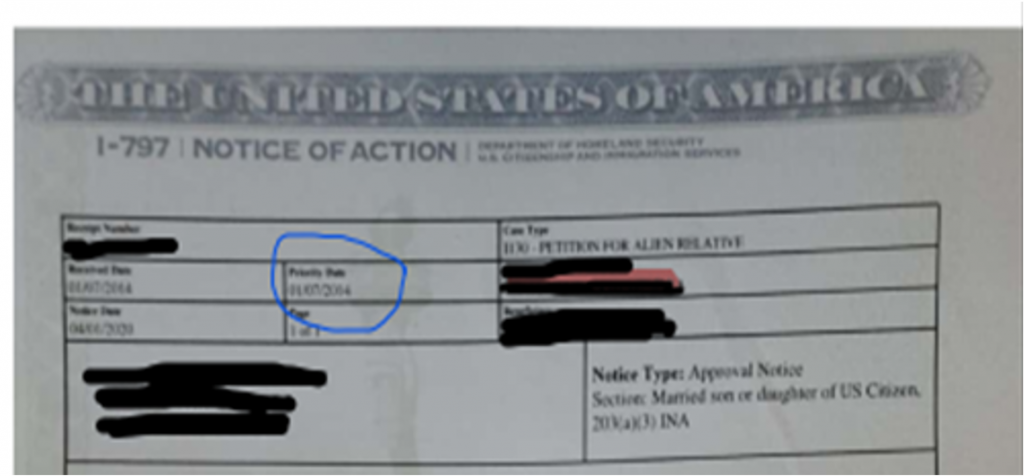
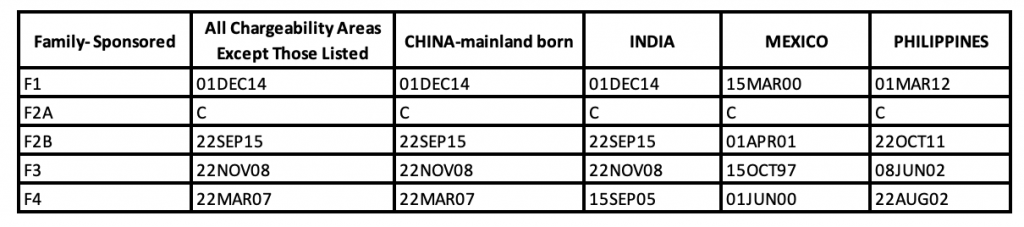
Follow Case processing times
Follow Case processing times
Follow Case processing times
a. It is either simple luck or by fluke. It happens in 1 in 1,000 cases probably.
b. Or, the categories (what is the Work permit based on) could be different
a. A: Technically yes, you can. But if it is based on an Adjustment of status application based on approved U Visa status, you should not stay for more than 60-70 days outside the United States until your Green Card is granted.
b. If it is based on a pending adjustment of status based on an Immediate relative or Family preference petition or employment-based petition, again, you can travel but there are restrictions based on your case background. It is best to consult an attorney for it.
a. Once your petition is filed, for your case status:
b. Visit Google and type USCIS Case processing times
c. Select your Case Type such as I-485 or I-918 or I-129 or whatever it is
d. Select the Service Center – found at the bottom of your Receipt Notice, for example:
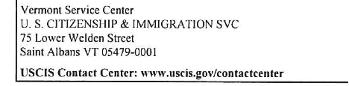
e. Select the Service Center and Case type such as I-485 based on Immediate Relative or Employment, for example:
i.10.5 Months to 19 Months Employment-Based adjustment applications – September 23, 2020
ii.25 Months to 52 Months Based on grant of asylum more than 1 year ago – December 20, 20
iii. Or I-765 – 8.5 Months to 12.5 Months Based on being an L-2 spouse of an L-1 nonimmigrant [(a)(18)] April 16, 2021
f. You can see what USCIS is currently working on. Compare it to when yours was filed, example:
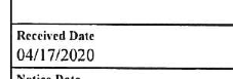
Just follow this for an estimate of when your case can be decided by USCIS.
Answer: USCIS tries to prioritize quality and tries to find the balance between quality and efficiency. We’re trying to work into the backlog as much as possible while maintaining that balance. USCIS is considering new operations efficiencies and ways to improve processing times, including adding more adjudicators. Since the last stakeholder meeting in March, VSC and NSC have trained 50 new officers to conduct bona fide determinations (BFDs) and waitlist reviews. When the BFD guidance was implemented, USCIS began reviewing the cases with the oldest receipts first. In the first year of the BFD process, USCIS conducted almost 42,000 BFD reviews; of those, nearly 30,000principals and 12,000 derivatives have received BFDs. USCIS referred 7,300 principals and 6,300derivatives to waitlist review.
Also, if you look at the I-918 website, if a petitioner or derivative has a pending 918/918A and they haven’t already submitted the I-765, then they can do so at the address in instructions without waiting for the BFD. This is a way we can streamline adjudications and improve processing times
Receipts cannot be issued until the fee waiver is adjudicated because the rejection notice encompasses all the possible reasons for rejection, including fee waiver denial. Staff attrition has affected receipt processing and fee waiver review. USCIS has hired additional staff and training is ongoing.
Both service centers train staff on processing receipts and fee waiver requests to eliminate the backlog as quickly as possible. The centers have significantly reduced their backlogs since our March engagement. Receipts are currently issued within 60 days of filing.
We will take this suggestion under consideration. We recommend that U/T nonimmigrants submit their I-94 card showing valid admission when filing Form I-765, Application for Employment Authorization. However, Form I-765 is adjudicated in order of receipt. Current processing is 5.5-8.5 months.
USCIS is unable to create a program-wide policy allowing alternate evidence due to national security and public safety concerns, but USCIS has communicated with the Department of State (DOS) and expressed the need to prioritize biometrics for U/T applicants. USCIS liaises with DOS on a case-by-case basis.
We have been coordinating with the Department of State, and this is something we will internally consider and determine if this is something we can request from them.
SCIS has coordinated with CBP on this issue. CBP is aware and says they are working on a policy to ensure that I-94s are printed upon arrival for T & U nonimmigrants admitted at a POE. Please note that CBP cannot print I-94s for applicants who were approved while in the United States. Nor can individuals who arrived in a non-T or U class of admission obtain their I-94 on the public I-94website after receiving T or U nonimmigrant status because they fall under 8 USC § 1367.
